Thalassemia Collaborative Strategies promote partnerships between healthcare providers, advocacy groups, and support organizations to improve awareness, patient care, education, and treatment access. These collaborative efforts help strengthen community support systems and enhance the overall quality of life for individuals living with thalassemia.
Thalassemia is a complex genetic blood disorder that affects the body’s ability to produce normal hemoglobin. Because hemoglobin is the protein in red blood cells that carries oxygen, individuals with this condition often experience chronic anemia, fatigue, and a range of severe complications. Managing the disorder requires frequent medical interventions, such as lifelong blood transfusions and regular iron chelation therapy, to prevent organ damage.
Handling this intense medical regimen is a massive undertaking for any single patient, family, or healthcare provider. As medical science advances, the healthcare community has realized that operating in silos is no longer sufficient. Achieving optimal outcomes demands a unified approach that brings together multiple disciplines, resources, and support networks.
This growing need for teamwork has accelerated the development of Thalassemia Collaborative Strategies across healthcare systems worldwide. These coordinated efforts unite medical professionals, researchers, advocacy groups, and policymakers to create comprehensive support systems. By implementing Thalassemia Collaborative Strategies, the medical community can deliver more holistic, effective, and accessible care to patients worldwide while improving long-term health outcomes and patient quality of life.
Understanding the Landscape: Challenges and Opportunities
 To fully grasp the importance of teamwork in this field, we must first look at the hurdles patients and providers face daily. The landscape of blood disorder management is filled with logistical, financial, and educational roadblocks that make comprehensive treatment difficult for many families. These challenges emphasize why Thalassemia Collaborative Strategies are becoming increasingly important in modern healthcare systems.
Current Challenges in Thalassemia Management
One of the most pressing issues is unequal access to specialized care. Patients living in rural or underserved areas often struggle to find hematologists experienced in treating rare genetic blood disorders. This geographic disparity leads to delayed diagnoses and inconsistent treatment protocols, limiting the effectiveness of long-term care.
Additionally, research funding for rare conditions frequently falls short compared to more common diseases. Without adequate funding, the development of new therapies, such as gene editing and advanced stem cell transplants, moves at a slower pace. Limited financial resources also reduce opportunities for patient outreach, caregiver training, and specialized healthcare programs.
Patient education presents another significant hurdle. Many individuals and their caregivers lack access to easily digestible, culturally relevant information about managing the disease daily. Navigating dietary restrictions, recognizing early symptoms of iron overload, and adhering to strict medication schedules can overwhelm families who do not have a strong support system. These barriers further highlight the importance of Thalassemia Collaborative Strategies that connect patients with reliable education and support networks.
Opportunities for Improvement Through Collaboration
These obstacles highlight clear opportunities for systemic improvement. When organizations pool their resources, they can bridge the gaps in access and funding. Joint educational campaigns can reach wider audiences, while shared research databases can accelerate clinical trials. Teamwork allows local clinics to consult with global experts, ensuring that every patient receives care based on the latest medical guidelines.
Through effective Thalassemia Collaborative Strategies, healthcare institutions, advocacy groups, and research organizations can work together to create stronger support systems for patients. Collaboration also improves awareness campaigns, expands access to innovative treatments, and encourages faster scientific progress. As partnerships continue to grow globally, these collaborative efforts are helping shape a more connected, accessible, and patient-centered future for thalassemia care.
Key Pillars of Effective Thalassemia Collaborative Strategies
Building a strong support network requires a structured approach. Effective Thalassemia Collaborative Strategies rely on four foundational pillars to transform how care is delivered and sustained. These pillars help create a more coordinated, patient-centered system that improves both treatment outcomes and overall quality of life.
Interdisciplinary Healthcare Teams
Proper management of this condition requires more than just a hematologist. A truly integrated healthcare team includes nurses, social workers, nutritionists, cardiologists, and endocrinologists. Each professional contributes specialized expertise that supports long-term patient wellbeing.
Each specialist plays a vital role. While a hematologist manages blood transfusions and chelation therapy, a cardiologist monitors the heart for signs of iron toxicity. Nutritionists guide patients through necessary dietary adjustments, and social workers help families navigate the financial and emotional stress of a chronic illness. When these professionals communicate seamlessly and share patient records, the individual receives comprehensive, unified care that addresses all aspects of their health. This level of coordination is one of the most important strengths of successful Thalassemia Collaborative Strategies.
Patient and Family Engagement
Medical treatment is only one part of the equation. Empowering patients to become active participants in their health journey is just as critical. Engaged patients are more likely to adhere to their treatment plans and report new symptoms early. Educating families about medication schedules, nutritional needs, and symptom monitoring improves daily disease management and reduces preventable complications.
Support groups and patient advocacy organizations serve as the bridge between clinical care and daily life. These groups provide emotional backing, practical advice, and a safe space for individuals to share their experiences. When healthcare providers actively collaborate with these support networks, they gain valuable insights into the real-world challenges their patients face. Strong patient involvement strengthens Thalassemia Collaborative Strategies by ensuring that treatment plans reflect both medical expertise and everyday patient experiences.
In addition, digital communication tools and virtual support communities are expanding opportunities for collaboration. Patients can now connect with specialists, caregivers, and advocacy groups more easily than ever before. These innovations continue to strengthen Thalassemia Collaborative Strategies by making education, emotional support, and healthcare guidance more accessible across different regions and communities.
Research and Development Partnerships
Medical breakthroughs rarely happen in isolation. Accelerating new treatments requires strong partnerships between academic institutions, pharmaceutical companies, and nonprofit foundations.
By sharing data and funding, these groups can run larger, more diverse clinical trials. Collaborative research networks can pool genetic data from across the globe to better understand how different mutations affect the disease’s progression. For instance, working with major research hubs like the Cooley’s Anemia Foundation helps direct crucial funding toward emerging gene therapies and improved chelation drugs.
Policy and Advocacy
To create lasting change, collaborative efforts must reach the highest levels of government. Advocacy groups, healthcare providers, and patients must work together to influence health policy and secure public funding for treatment infrastructure.
Advocates push for legislation that guarantees insurance coverage for lifelong treatments and mandates newborn screening for genetic blood disorders. By building strong thalassemia partnerships, local and national organizations can present a united front to lawmakers, ensuring the voices of the rare disease community are heard loud and clear.
Implementing Thalassemia Collaborative Strategies: Best Practices
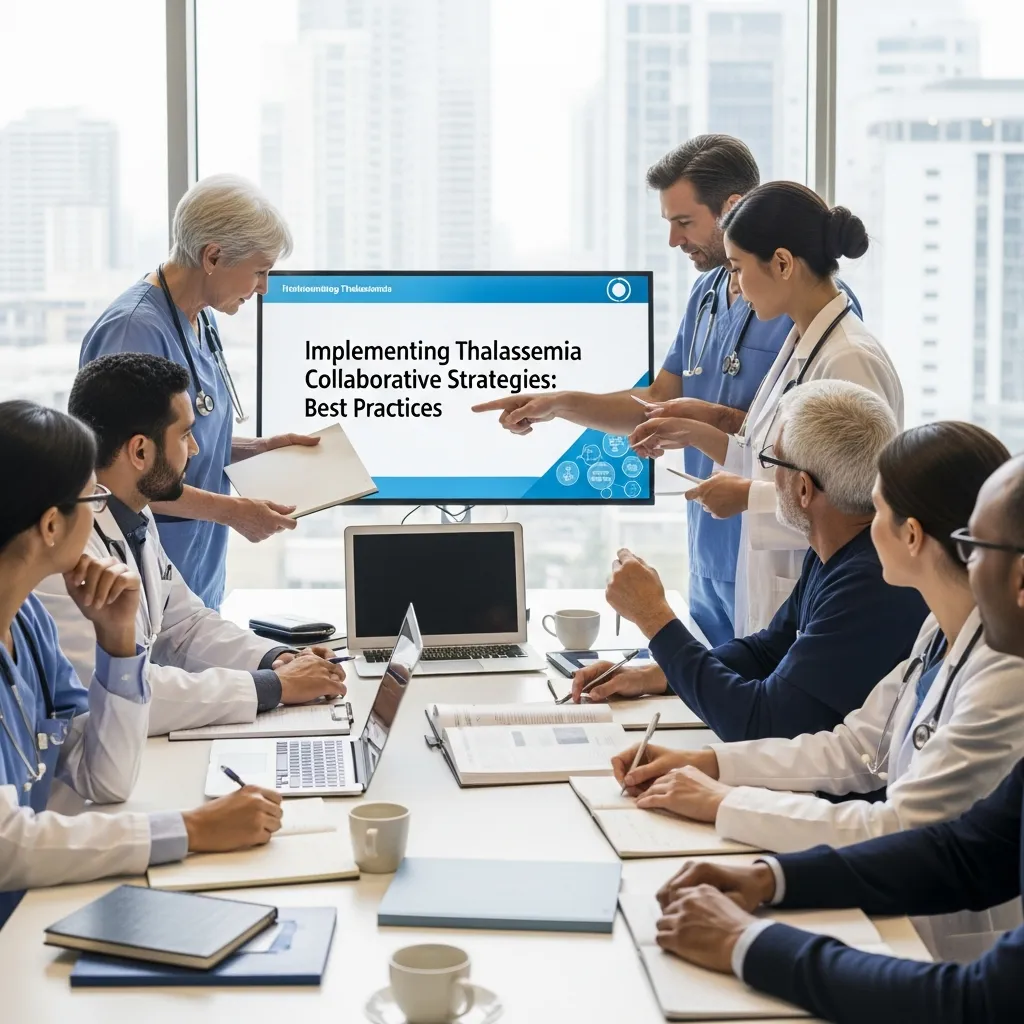 Understanding the pillars of collaboration is only the first step. Organizations must implement these concepts using practical, proven methods.
Establishing Clear Communication Channels
Frequent and transparent communication is the glue that holds any partnership together. Healthcare providers need secure, efficient ways to share patient data with other specialists. Researchers must publish their findings openly so clinical teams can adjust their treatment protocols.
Regular multi-disciplinary meetings, often called “tumor boards” or “case conferences” in other medical fields, should be a standard practice. During these sessions, the entire care team can discuss complex cases, ensuring everyone is aligned on the treatment plan.
Leveraging Technology for Data Sharing and Telemedicine
Technology has drastically improved how care networks function. Secure cloud-based platforms allow different hospitals to share electronic health records instantly. This means a patient can visit a local clinic for a blood transfusion while their primary hematologist in another city monitors their lab results in real-time.
Telemedicine also plays a massive role in expanding access to care. Virtual consultations allow patients in remote areas to speak with top specialists without the burden of travel. For grassroots organizations looking to maximize their digital outreach, learning 6 Collaborative Strategies for Thalassemia Affiliates can provide excellent guidance on using technology to connect communities.
Training and Education Programs
Standardizing care across different regions requires continuous education. Teaching hospitals and specialized treatment centers should partner with community clinics to offer training programs. These educational partnerships are an important component of effective Thalassemia Collaborative Strategies because they help improve consistency in patient care and treatment quality.
These programs can teach local nurses the best techniques for administering transfusions or train primary care doctors to recognize the early signs of complications. Caregiver workshops are equally important, equipping family members with the skills they need to manage medications safely at home. Through well-structured Thalassemia Collaborative Strategies, healthcare providers can ensure that both medical professionals and caregivers stay informed about the latest treatment guidelines and patient support practices.
Online learning platforms and virtual seminars are also expanding access to specialized education. Healthcare workers in remote or underserved areas can now receive advanced training without traveling long distances. This broader access to education strengthens healthcare systems and improves the quality of care available to patients worldwide.
Measuring Impact and Adapting Strategies
No strategy is complete without a way to measure its success. Collaborative networks must establish clear metrics to evaluate their programs. This might include tracking patient hospital admission rates, measuring improvements in average hemoglobin levels, or surveying patient satisfaction.
By continuously reviewing this data, partnerships can identify what is working and what needs adjustment. If a specific outreach program fails to increase screening rates, the coalition can pivot and try a new approach. Regular evaluation helps Thalassemia Collaborative Strategies remain flexible, data-driven, and responsive to patient needs.
In addition, analyzing long-term trends allows organizations to identify healthcare gaps, improve resource allocation, and strengthen future planning. By combining education, performance tracking, and continuous adaptation, Thalassemia Collaborative Strategies can create more sustainable and effective healthcare systems for individuals living with thalassemia.
Case Studies and Examples of Successful Initiatives
Real-world examples prove the value of these strategic partnerships. In several countries, national thalassemia registries have been established by combining data from dozens of independent hospitals. These registries allow health ministries to track disease prevalence, forecast the national demand for donor blood, and allocate resources more efficiently. Such systems are excellent examples of how Thalassemia Collaborative Strategies improve healthcare planning and patient support on a national scale.
Another strong example is the creation of joint comprehensive care clinics. In these setups, a patient can see their hematologist, cardiologist, and social worker all in one building on the same day. This collaborative logistical effort drastically reduces the burden of scheduling multiple appointments, leading to higher clinic attendance and better overall health outcomes.
In many regions, advocacy organizations and healthcare institutions also work together to launch public awareness campaigns, free screening programs, and educational workshops. These initiatives help promote early diagnosis and improve community understanding of genetic blood disorders. Through coordinated efforts like these, Thalassemia Collaborative Strategies continue to strengthen patient care systems, expand healthcare access, and encourage long-term improvements in treatment and quality of life.
Future Outlook: The Evolution of Care
The future of blood disorder management looks incredibly promising, largely due to advancing technologies and deeper global connections. Artificial intelligence will soon play a major role in these collaborative networks. AI tools can analyze shared databases to predict which patients are at the highest risk for heart complications, allowing doctors to intervene earlier and improve treatment outcomes.
As healthcare systems become more digitally connected, Thalassemia Collaborative Strategies will continue to evolve through smarter data sharing, remote monitoring, and personalized treatment planning. These advancements will help specialists coordinate care more efficiently while improving access for patients in underserved regions. Telemedicine platforms and cloud-based patient records are already strengthening communication between healthcare providers and support organizations worldwide.
Furthermore, the rollout of potential curative treatments, such as CRISPR gene editing, will require unprecedented teamwork. Delivering these complex, expensive therapies will demand seamless coordination between the biotech companies manufacturing the treatments, the specialized hospitals administering them, and the insurance companies funding them. Integrated care models will transition from being a helpful addition to an absolute necessity.
Future Thalassemia Collaborative Strategies will also focus heavily on patient education, advocacy, and international research partnerships. By combining scientific innovation with strong global cooperation, healthcare systems can accelerate the development of safer therapies and improve long-term quality of life for patients. These collaborative efforts are shaping a future where thalassemia management becomes more precise, accessible, and patient-centered than ever before.
Advancing Health Through Collective Action
 Thalassemia Collaborative Strategies offer the most viable path forward for improving the lives of those affected by this challenging condition. By breaking down the walls between different medical disciplines, research institutions, and patient communities, we can build a healthcare framework that truly supports the whole person.
The journey toward better treatments and potential cures is not a path anyone should walk alone. It requires the combined effort, expertise, and compassion of a global network. To learn more about how you can support the broader rare disease community, consider exploring resources from the National Organization for Rare Disorders (NORD). Together, we can transform the future of care and ensure that every patient has the support they need to thrive.
FAQs
1. What are Thalassemia Collaborative Strategies?
Thalassemia Collaborative Strategies are coordinated efforts between healthcare providers, advocacy groups, and support organizations.
They aim to improve patient care, education, and treatment access.
These strategies strengthen overall thalassemia management systems.
2. Why are collaborative strategies important for thalassemia care?
They help combine medical expertise, resources, and patient support services.
This improves treatment quality and healthcare accessibility.
Collaboration also helps reduce gaps in patient care.
3. Who is involved in Thalassemia Collaborative Strategies?
Hematologists, nurses, researchers, advocacy groups, and policymakers are commonly involved.
Patients and caregivers also play an important role.
Together, they create a more connected healthcare network.
4. How do collaborative strategies improve patient outcomes?
They encourage better communication between healthcare teams.
Patients receive more coordinated and personalized care.
This can reduce complications and improve quality of life.
5. What role do support groups play in collaboration?
Support groups provide emotional support and practical guidance.
They help patients share experiences and resources.
These groups strengthen community-based thalassemia care.
6. Can technology support Thalassemia Collaborative Strategies?
Yes, digital tools improve communication and data sharing.
Telemedicine and online platforms expand healthcare access.
Technology also supports patient education and remote care.
7. How do training programs help healthcare providers?
Training programs improve medical knowledge and treatment consistency.
They teach healthcare workers updated care practices.
This helps deliver better patient-centered treatment.
8. Why is patient education important in thalassemia care?
Educated patients can manage symptoms and treatments more effectively.
They are more likely to follow medication schedules correctly.
Patient awareness improves long-term health outcomes.
9. How is the success of collaborative strategies measured?
Organizations track patient outcomes, hospital admissions, and satisfaction levels.
Data helps identify strengths and areas for improvement.
Continuous evaluation improves future healthcare planning.
10. What is the future of Thalassemia Collaborative Strategies?
Future strategies will rely more on technology and global partnerships.
AI, telemedicine, and gene therapy research will expand collaboration.
These advancements aim to improve treatment and patient quality of life.
Conclusion
Thalassemia Collaborative Strategies are transforming how genetic blood disorders are managed by promoting teamwork between healthcare providers, advocacy groups, researchers, and patient communities. Through coordinated care, education, technology, and ongoing research, these strategies help improve treatment access, patient support, and long-term health outcomes. As global collaboration continues to grow, Thalassemia Collaborative Strategies will play an even greater role in creating more effective, accessible, and patient-centered healthcare systems for the future.