



Mild thalassemia symptoms include persistent fatigue, mild anemia, pale skin, and occasional shortness of breath. Many people with the thalassemia trait show few or no obvious signs, making early diagnosis through blood testing essential. Proper management, diet, and regular monitoring can significantly improve quality of life.
Feeling tired more than usual? Getting winded on a short walk when you never used to? These are easy symptoms to brush off. But for millions of people worldwide, these subtle signs are the first clue that something more specific is happening inside their blood.
Mild thalassemia—often called thalassemia trait or thalassemia minor—is one of the most commonly misunderstood genetic conditions. According to the World Health Organization, approximately 5% of the global population carries a hemoglobin disorder gene, yet a large proportion of those carriers never receive a formal diagnosis. The condition mimics everyday tiredness and routine anemia so closely that it frequently goes unrecognized for years.
This matters for several reasons. Misdiagnosis leads to wrong treatment—particularly the dangerous habit of taking iron supplements that the body doesn’t need. Unrecognized carrier status can result in uninformed family planning decisions. And for those who do experience mild thalassemia symptoms, simply not knowing the cause of their fatigue leaves them without the tools to manage it effectively.
This guide covers everything you need to understand about mild thalassemia symptoms: what they look like, why they happen, how they are diagnosed, and how to live well with this condition. Whether you have just received a diagnosis, suspect you may be a carrier, or are planning a family, this is your starting point.
What Is Mild Thalassemia?
Thalassemia is an inherited blood disorder that reduces the body’s ability to produce normal hemoglobin—the protein inside red blood cells responsible for carrying oxygen. When hemoglobin production is insufficient, red blood cells are smaller and less effective, leading to varying degrees of anemia.
The condition is classified by severity. Thalassemia major is the most serious form, requiring lifelong blood transfusions and intensive medical care. Thalassemia intermedia falls in the middle. Mild thalassemia—also called thalassemia minor or thalassemia trait—sits at the least severe end of the spectrum. A person with mild thalassemia typically inherits one faulty gene from one parent, while the other gene functions normally.
Thalassemia is further categorized by which protein chain of hemoglobin is affected: alpha thalassemia and beta thalassemia. Both types have mild forms. In alpha thalassemia trait, one or two of the four alpha-globin genes carry mutations. In beta thalassemia minor, one of the two beta-globin genes is defective. The practical result in both cases is a similar clinical picture: mildly reduced hemoglobin levels and small red blood cells, often with few noticeable symptoms.
Understanding which type and subtype a person has is important for predicting genetic risk—particularly for family planning—even when the individual feels mostly healthy.
What Are the Common Mild Thalassemia Symptoms?

Is fatigue in mild thalassemia different from normal tiredness?
Fatigue is the most frequently reported mild thalassemia symptom, and it deserves careful attention precisely because it is so easy to attribute to other causes—poor sleep, stress, or a demanding schedule.
Fatigue in mild thalassemia is driven by reduced hemoglobin levels. When hemoglobin is below the normal range, the blood carries less oxygen to muscles, organs, and the brain. The result is a persistent, low-grade exhaustion that does not fully resolve with rest. A person may wake up after a full night’s sleep and still feel drained. Physical activities that once required no special effort—climbing stairs, carrying groceries, walking briskly—begin to feel disproportionately tiring.
This kind of fatigue is qualitatively different from ordinary tiredness. It is sustained rather than occasional. It does not improve reliably with coffee or an early bedtime. And unlike situational exhaustion linked to a specific stressor, it tends to be constant regardless of circumstances.
Recognizing this distinction is the first step toward pursuing a diagnosis rather than simply managing symptoms indefinitely.
What are the signs of mild anemia in thalassemia trait?
Mild anemia is the defining laboratory finding in thalassemia minor, but its physical signs can be subtle enough to overlook. Common mild anemia symptoms in people with the thalassemia trait include:
- Pale skin: Reduced hemoglobin means less color in the skin, particularly noticeable in the face, lips, and inner eyelids
- Shortness of breath on exertion: Difficulty breathing during physical activity that seems out of proportion to the effort involved
- Heart palpitations: A faster or stronger heartbeat as the heart compensates for lower oxygen-carrying capacity
- Dizziness or lightheadedness: Especially when standing up quickly or during physical activity
- Headaches: Often linked to reduced oxygen delivery to the brain
- Cold hands and feet: Poor circulation related to reduced red blood cell efficiency
These symptoms range from barely noticeable to genuinely disruptive, depending on the degree of anemia and the individual’s overall health. Some people with thalassemia trait report none of these signs at all and discover their condition only through routine blood work.
What are the other vague symptoms that people with mild thalassemia may experience?
Beyond fatigue and mild anemia symptoms, some people with the thalassemia trait report a range of non-specific physical complaints that are easily attributed to other causes:
- Difficulty concentrating: Reduced oxygen to the brain can affect mental sharpness and focus
- Reduced exercise tolerance: Hitting an unexpected “wall” during workouts or feeling slower to recover
- Mild jaundice: A faint yellowish tint to the skin or whites of the eyes, caused by the slightly elevated breakdown of red blood cells
- Mild splenomegaly: In some cases, a mildly enlarged spleen, though this is more common in intermediate forms
- General sense of not feeling well: A vague malaise that is hard to describe but persistent
Because none of these symptoms are dramatic or specific to thalassemia, many people spend years attributing them to lifestyle factors—overwork, poor diet, or simply getting older. This delay in recognition is one of the central challenges surrounding thalassemia trait symptoms.
What Are the Thalassemia Trait Symptoms and How Do They Differ by Type?
How do alpha thalassemia trait symptoms present?
Alpha thalassemia trait (two gene deletions) typically produces very mild or no symptoms. The most consistent finding is microcytosis—small red blood cells—visible on a blood test. Many people with alpha thalassemia trait have hemoglobin levels within or just below the normal range and may never experience noticeable symptoms. Fatigue in mild thalassemia cases of the alpha type tends to be the most common complaint, though it is rarely severe.
A silent alpha thalassemia carrier (one gene deletion) produces no symptoms whatsoever. This distinction matters most for family planning, since two silent carriers can have a child with a more significant form of the disease.
How do beta thalassemia minor symptoms present?
Beta thalassemia minor (one defective beta-globin gene) produces a slightly more consistent clinical picture. Thalassemia trait symptoms in beta thalassemia minor typically include:
- Mild to moderate anemia that does not respond to iron supplementation
- Consistently small red blood cells (microcytosis) and pale red blood cells (hypochromia) on blood tests
- Elevated levels of hemoglobin A2 on hemoglobin electrophoresis—a hallmark diagnostic finding
- Occasional fatigue, particularly during illness, pregnancy, or physical stress
Beta thalassemia minor is the form most commonly detected during pregnancy screening, since anemia that fails to improve with iron therapy prompts further investigation.
What Causes Mild Thalassemia and How Is It Inherited?
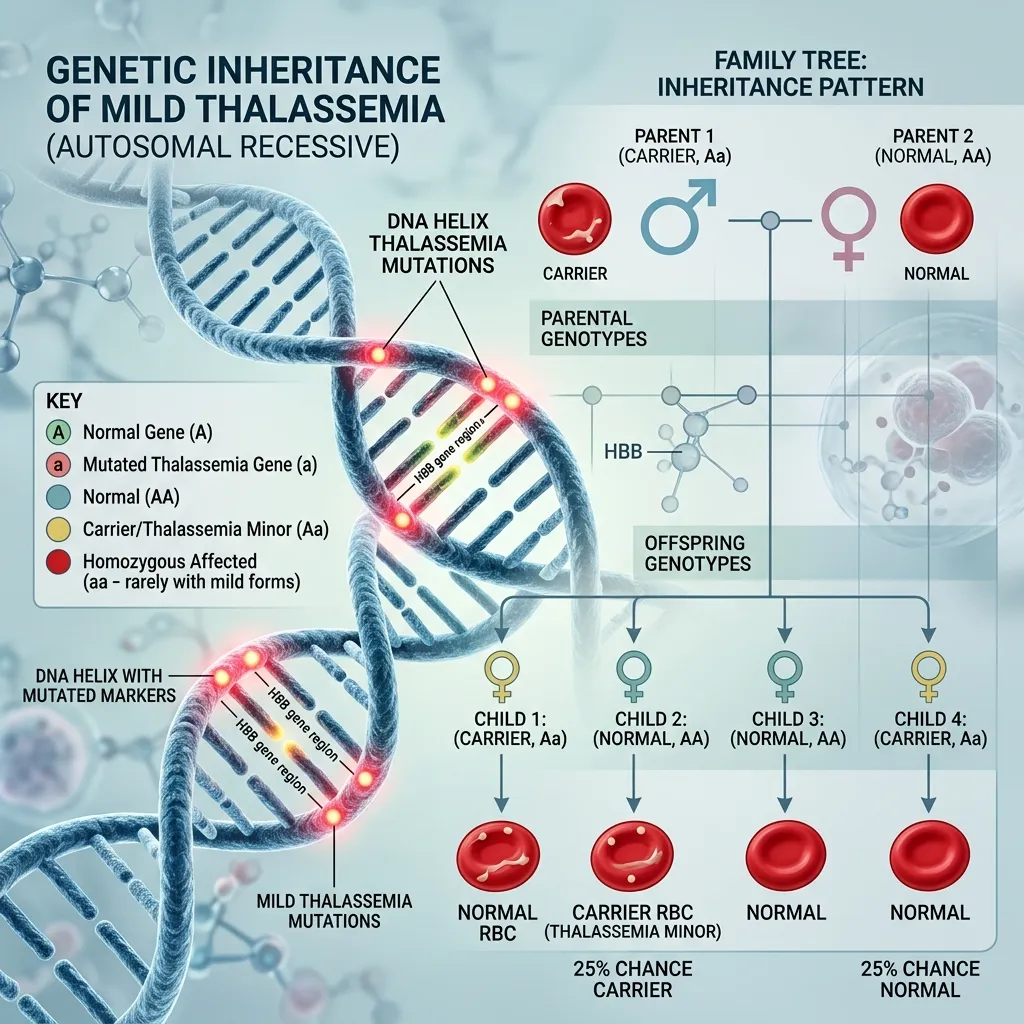 Thalassemia is caused by mutations in the genes that control hemoglobin production. These mutations reduce or eliminate the production of one of the protein chains that make up hemoglobin—either alpha-globin or beta-globin.
The inheritance pattern is autosomal recessive. For mild thalassemia (thalassemia trait), a person inherits one mutated gene and one normal gene. The normal gene compensates partially, which is why symptoms remain mild or absent. Both parents may be carriers without knowing it.
When two carriers have a child, the statistical possibilities for each pregnancy are:
- 25% chance the child inherits both mutated genes (thalassemia major or intermedia)
- 50% chance the child inherits one mutated gene (thalassemia trait, like the parents)
- 25% chance the child inherits no mutated genes (completely unaffected)
This is why genetic counseling for thalassemia is so important for people who know they carry the trait. Understanding these probabilities before planning a family is the most powerful preventive step available.
How Is Mild Thalassemia Diagnosed?
What blood tests confirm mild thalassemia?
Diagnosing mild thalassemia begins with a Complete Blood Count (CBC). Several characteristic findings appear consistently:
- Low hemoglobin: Mildly reduced, typically between 9 and 11 g/dL in symptomatic carriers
- Low MCV (mean corpuscular volume): Small red blood cells, the most consistent finding
- Low MCH (mean corpuscular hemoglobin): Pale, under-filled red blood cells
- Normal or high red blood cell count: Unlike iron deficiency, which reduces red cell count, thalassemia trait produces many small cells
The critical next step is hemoglobin electrophoresis, which separates and measures the different types of hemoglobin in the blood. In beta thalassemia minor, this test reveals an elevated hemoglobin A2 level, which is the defining diagnostic marker.
How is mild thalassemia different from iron deficiency anemia?
This distinction is one of the most clinically important points in thalassemia care. Both conditions produce small red blood cells and low hemoglobin, causing their frequent confusion. However, the treatment and implications differ significantly.
|
Feature |
Mild Thalassemia |
Iron Deficiency Anemia |
|---|---|---|
|
Cause |
Genetic |
Nutritional or blood loss |
|
Red blood cell count |
Normal or high |
Low |
|
Serum ferritin |
Normal or elevated |
Low |
|
Response to iron |
No improvement |
Significant improvement |
|
Hemoglobin A2 |
Elevated (beta type) |
Normal |
Prescribing iron supplements to a person with thalassemia trait is not only ineffective—it can be harmful. Thalassemia patients often have normal or elevated iron stores, and adding more iron risks iron overload. Accurate diagnosis through hemoglobin electrophoresis prevents this error.
When is genetic testing recommended?
Genetic testing through DNA analysis identifies the precise mutations involved. This is particularly valuable when:
- Hemoglobin electrophoresis results are inconclusive
- Alpha thalassemia is suspected (hemoglobin electrophoresis is less reliable for alpha types)
- A couple is planning a pregnancy and both partners are suspected carriers
- Family members need to understand their own risk
For a thorough overview of carrier testing, the thalassemia carrier screening test guide provides detailed, practical guidance on the process.
Living Well with Mild Thalassemia

How can fatigue in mild thalassemia be managed effectively?
Managing fatigue starts with accepting that it has a physiological basis rather than a motivational or psychological one. Rest when the body signals it. That said, complete inactivity is counterproductive—regular, moderate aerobic exercise improves cardiovascular efficiency and helps the body use oxygen more effectively despite lower hemoglobin.
Practical strategies that help include:
- Prioritizing sleep: Consistent, adequate sleep is non-negotiable for anyone managing chronic fatigue
- Pacing activities: Spreading demanding tasks across the day rather than clustering them prevents energy crashes
- Staying hydrated: Dehydration worsens symptoms, particularly dizziness and headaches
- Monitoring symptoms during illness: Infections temporarily worsen anemia; rest more aggressively during sick periods and consult a doctor if symptoms become notably worse
What dietary considerations support people with mild thalassemia?
Nutrition plays a meaningful supporting role in managing mild thalassemia symptoms. Key points include:
- Avoid iron-fortified foods and iron supplements unless specifically instructed by a physician—thalassemia patients often have elevated iron, not a deficit
- Prioritize folate-rich foods: Folate supports red blood cell production. Green leafy vegetables, legumes, and citrus fruits are excellent sources
- Ensure adequate calcium and vitamin D: These nutrients protect bone density, which can be mildly affected in some thalassemia carriers
- Eat a balanced, whole-food diet: Overall nutritional status directly impacts energy levels and immune function
For more detailed dietary guidance, the best foods for thalassemia patients resource provides practical, condition-specific recommendations.
What lifestyle adjustments benefit people with the thalassemia trait?
Beyond diet and exercise, a few lifestyle adjustments make a meaningful difference:
- Avoid unsupervised iron supplementation: This bears repeating because it remains one of the most common and preventable errors
- Inform healthcare providers of your status: Always disclose thalassemia trait before receiving iron prescriptions, starting new medications, or during any investigation for anemia
- Manage stress: Chronic stress worsens fatigue and immune function—mindfulness, therapy, or simple routine-building all help
- Stay current on vaccinations: Immune function can be mildly affected, making preventive care worthwhile
For a comprehensive approach to day-to-day living, the lifestyle tips for thalassemia guide offers actionable, evidence-informed suggestions.
How often should someone with mild thalassemia have medical check-ups?
For most people with thalassemia trait, the condition requires minimal active treatment but does warrant regular monitoring. A reasonable approach includes:
- Annual CBC: To track hemoglobin levels and detect any change in status
- Iron studies: Periodically check serum ferritin and transferrin saturation to confirm iron levels are appropriate
- Review during pregnancy: Anemia can worsen during pregnancy, requiring closer monitoring and coordination with an obstetrician and hematologist
Mild Thalassemia in Pregnancy
What are the risks and management strategies during pregnancy?
Pregnancy places additional demands on the body’s blood production. For people with mild thalassemia, hemoglobin levels can drop further than usual during pregnancy, sometimes reaching levels that require supplementation or closer monitoring.
Key points for pregnant people with thalassemia trait include:
- Avoid iron supplementation unless iron deficiency is confirmed through blood tests: Many practitioners reflexively prescribe iron to all pregnant patients with anemia, which is inappropriate for those with thalassemia trait
- Folate supplementation is recommended: This supports the increased red blood cell demands of pregnancy
- Partner screening is essential: If both partners carry the thalassemia trait, each pregnancy carries a 25% chance of a child with thalassemia major. This makes prenatal genetic counseling critical
Why is partner screening so important?
Partner screening transforms a personal health issue into a family planning decision. When only one partner carries the trait, children may inherit the trait but are at no risk of severe thalassemia. When both partners carry the trait, the stakes change entirely. Knowing this before conception—or early in pregnancy—opens access to prenatal testing and informed decision-making.
Countries that have implemented mandatory premarital or pre-conception screening, such as Cyprus and parts of Italy, have dramatically reduced the incidence of severe thalassemia births, in some regions by more than 90% (according to the Centers for Disease Control and Prevention).
Mild Thalassemia in Children and Newborns

How are thalassemia trait symptoms recognized in children?
Children with thalassemia trait often appear entirely healthy. When symptoms do occur, they tend to mirror those seen in adults: mild fatigue, slightly pale appearance, and an incidental finding of small red blood cells on a blood test ordered for another reason.
The most important clinical issue for children with thalassemia trait is avoiding misdiagnosis as iron deficiency. A child who repeatedly fails to respond to iron supplements should be assessed for thalassemia through hemoglobin electrophoresis. For a deeper exploration of how thalassemia presents across childhood, the thalassemia symptoms in children guide provides a complete clinical picture.
What are the signs of thalassemia in newborns?
In newborns, mild thalassemia (trait) typically produces no observable symptoms. Most carriers are identified through newborn screening programs or through family history investigation following the diagnosis of a sibling with a more severe form.
Where symptoms do appear in the neonatal period, they are more consistent with severe thalassemia—pale skin, feeding difficulties, and failure to thrive emerging between 3 and 6 months as fetal hemoglobin is replaced by adult hemoglobin. For parents concerned about neonatal signs, the signs of thalassemia in newborns resource explains the warning signs and clinical response pathway in detail.
Advances in Thalassemia Research and Future Treatments
Research into thalassemia has accelerated considerably over the past decade. Several developments are particularly relevant for the thalassemia community:
- Gene therapy: Clinical trials are underway and, in some countries, regulatory approval has been granted for gene therapy approaches that correct the defective hemoglobin gene. While current applications target severe forms, the technology’s long-term trajectory is relevant to the broader thalassemia spectrum
- Fetal hemoglobin reactivation: Drugs that stimulate the body to produce fetal hemoglobin—which compensates for deficient adult hemoglobin—are in advanced development
- Improved diagnostics: Next-generation sequencing technologies are making genetic diagnosis faster, more affordable, and more accessible globally
- Digital health monitoring: Wearable technology and telemedicine platforms are improving the continuity of care for thalassemia patients in regions with limited specialist access
For those with mild thalassemia, these advances reinforce the importance of maintaining contact with a healthcare provider and staying current with evolving guidance—even when day-to-day symptoms are manageable.
Getting Diagnosed and Moving Forward
Mild thalassemia is, in many respects, one of the more manageable genetic conditions. Most people with the thalassemia trait live full, active lives with minimal medical intervention. The symptoms are real but not disabling for the majority, and the primary risks—misdiagnosis, inappropriate treatment, and uninformed family planning—are entirely preventable with the right information.
If persistent fatigue, mild anemia symptoms, or a family history of thalassemia applies to you, the most important next step is straightforward: request a CBC and hemoglobin electrophoresis from your physician. These tests are widely available, relatively inexpensive, and provide definitive answers.
Once you have a diagnosis, connect with a hematologist or specialist in genetic blood disorders. Build a care plan that addresses monitoring, diet, lifestyle, and—if relevant—family planning. Share your status with family members, who may benefit from their own screening.
Knowledge is the most effective tool available for managing mild thalassemia symptoms. The sooner it’s in your hands, the better equipped you are to make decisions that protect both your health and your family’s future.
Frequently Asked Questions About Mild Thalassemia Symptoms
1. What are the most common mild thalassemia symptoms in adults?
The most common mild thalassemia symptoms in adults include persistent fatigue, mild anemia, pale skin, occasional shortness of breath during exertion, and dizziness. Many people with thalassemia trait experience no noticeable symptoms and discover their condition only through routine blood testing.
2. How is fatigue in mild thalassemia different from regular tiredness?
Fatigue in mild thalassemia is driven by chronically reduced hemoglobin levels, which limit oxygen delivery to muscles and the brain. Unlike ordinary tiredness that resolves with rest, thalassemia-related fatigue is persistent and proportionate to activity level rather than sleep or lifestyle factors.
3. Can someone with thalassemia trait live a normal life?
Yes. Most people with thalassemia trait (mild thalassemia) live entirely normal lives. Mild anemia symptoms may be present but are rarely disabling. The main health priorities are accurate diagnosis, avoiding inappropriate iron supplementation, and being aware of the genetic implications for family planning.
4. Are mild thalassemia symptoms the same in men and women?
The core symptoms—fatigue, mild anemia, and pale skin—are similar across sexes. However, women with thalassemia trait may experience worsened anemia during menstruation or pregnancy, making regular monitoring more important during these periods.
5. Why is iron supplementation dangerous for people with mild thalassemia?
Thalassemia trait often presents with normal or elevated iron stores. Taking unnecessary iron supplements can cause iron overload, which damages the heart, liver, and endocrine system over time. A confirmed iron deficiency (via serum ferritin testing) is the only indication for iron supplementation in someone with thalassemia trait.
6. What is the difference between thalassemia trait symptoms and symptoms of thalassemia intermedia?
Thalassemia trait (mild) typically causes only mild anemia or no symptoms at all. Thalassemia intermedia produces moderate anemia, more pronounced fatigue, potential spleen enlargement, and occasional need for blood transfusions. The distinction is confirmed through hemoglobin electrophoresis and genetic testing.
7. Can mild thalassemia symptoms get worse over time?
In most cases, mild thalassemia remains stable throughout life. Symptoms can temporarily worsen during pregnancy, infection, or periods of significant physical stress. If hemoglobin levels drop noticeably or symptoms escalate significantly, medical evaluation is warranted to rule out a concurrent condition.
8. How does pregnancy affect mild thalassemia symptoms?
Pregnancy increases blood production demands, which can cause hemoglobin levels to drop further in women with thalassemia trait. Mild anemia symptoms may become more noticeable. Close monitoring, folate supplementation, and careful avoidance of unnecessary iron therapy are standard management approaches during pregnancy.
9. Do children with thalassemia trait have obvious symptoms?
Most children with thalassemia trait appear healthy and show no obvious symptoms. The condition is often identified incidentally through blood tests ordered for unrelated reasons, or through family screening after a sibling is diagnosed with a more severe form of thalassemia.
10. Should people with mild thalassemia symptoms see a specialist?
Yes. While thalassemia trait is manageable, an initial consultation with a hematologist ensures accurate diagnosis, appropriate monitoring intervals, and correct guidance on diet and supplementation. Partner screening and genetic counseling are especially important for those planning a family.
