


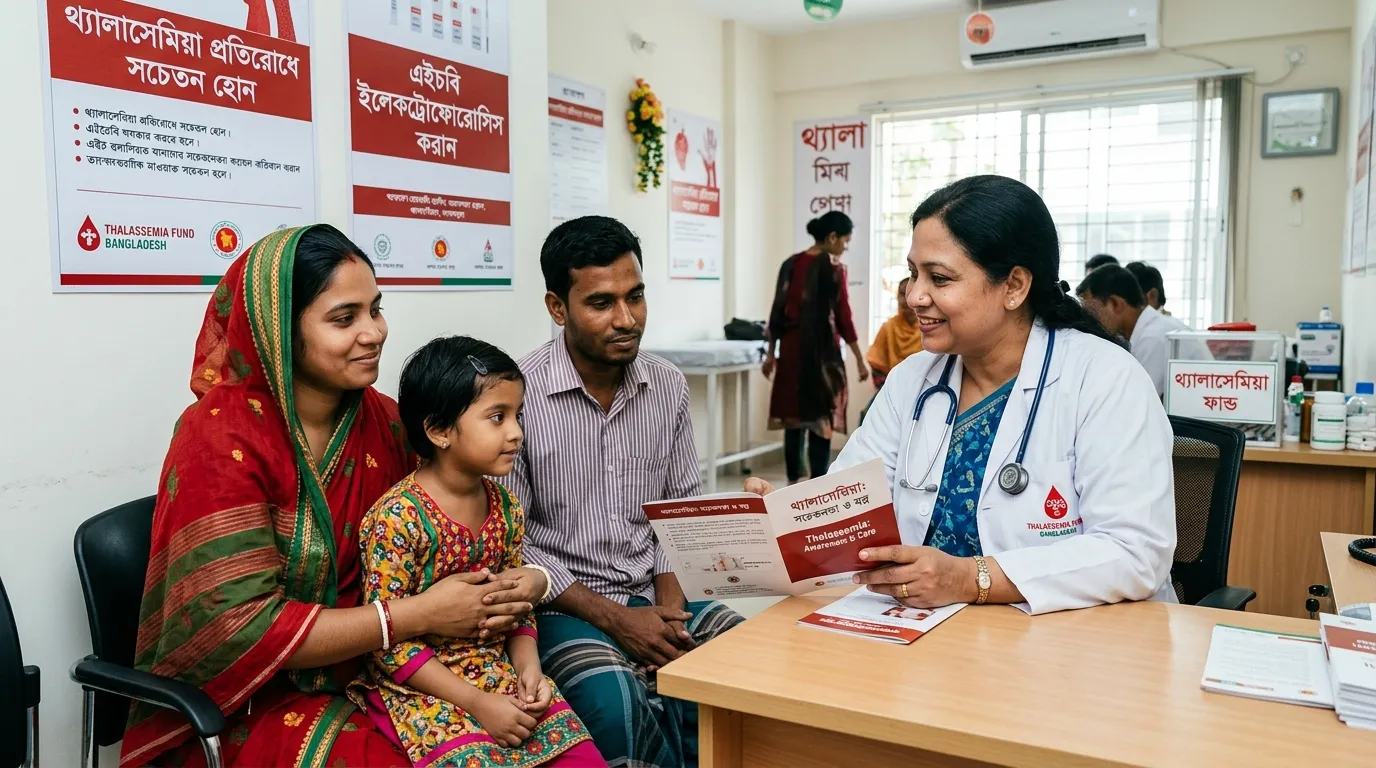
The disease is inherited in an autosomal recessive pattern. This means a child must receive a faulty gene from both parents to develop a severe form. People who carry just one faulty gene are called carriers. They usually feel completely healthy and rarely know they hold the gene.
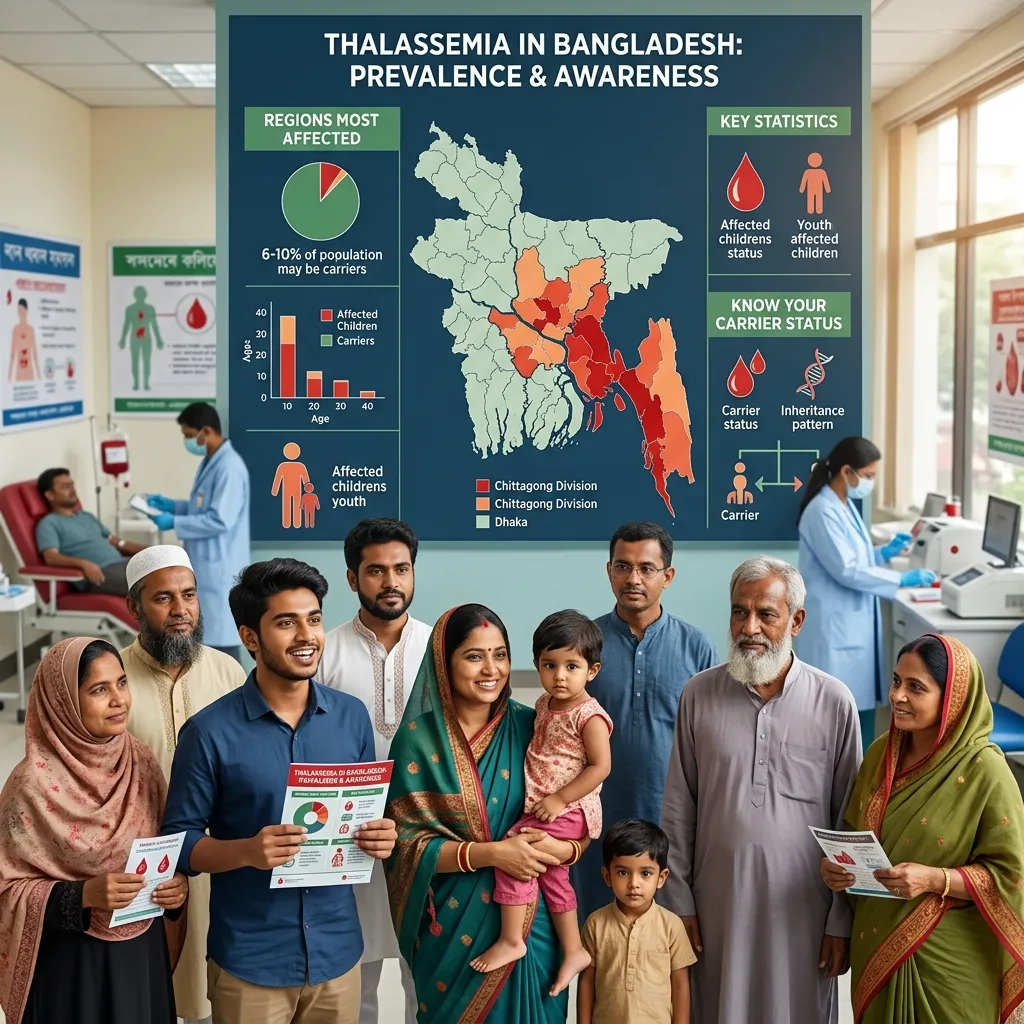
Bangladesh sits firmly within the global “thalassemia belt,” a region stretching across the Mediterranean, Middle East, and South Asia where carrier rates are high. Studies estimate that roughly 6 to 12 percent of Bangladesh’s population carries the thalassemia or hemoglobin E trait. With a population of more than 170 million, that translates to millions of silent carriers.
Two factors push new cases higher: low public awareness and the cultural practice of consanguineous (cousin) marriages, which increases the chance that two carriers will marry and have children. Without screening, these couples have no way of knowing their risk until a child is diagnosed.
Why is thalassemia awareness in Bangladesh so urgent?
The urgency comes down to a simple truth: thalassemia is far easier to prevent than to treat. A child born with thalassemia major may need a blood transfusion every two to four weeks for the rest of their life, along with daily iron chelation medication. For most Bangladeshi families, this cost is overwhelming.
Awareness directly reduces this burden. When carriers learn their status before marriage or pregnancy, they can make informed decisions and dramatically lower the chance of having an affected child. Countries that ran nationwide awareness and screening campaigns have cut new cases of severe thalassemia by over 90 percent.
Consider the math behind carrier marriages. When both partners are carriers, each pregnancy carries a 25 percent chance of a child with severe thalassemia, a 50 percent chance of a carrier child, and a 25 percent chance of an unaffected child. These odds are predictable—and avoidable—with the right knowledge.
Beyond the medical costs, awareness eases the emotional and financial strain on families and the wider healthcare system. Fewer affected births means fewer overstretched transfusion centers, lower demand on the national blood supply, and more resources for the patients who already need care. To understand the full picture, explore why thalassemia awareness and early detection matter.
What are the biggest challenges and misconceptions about thalassemia in Bangladesh?
Raising awareness is not as simple as sharing facts. Several deep-rooted barriers stand in the way.
Why do so many carriers remain unaware of their status?
Carriers usually have no symptoms, so they have no reason to seek testing. Many live their entire lives never knowing they carry the gene. Without targeted screening before marriage, the cycle of unknowing transmission continues from one generation to the next.
How does misinformation harm prevention efforts?
Common myths cause real damage. Some people believe thalassemia is contagious, which fuels stigma and social isolation. Others mistake it for simple iron deficiency anemia and take unnecessary iron supplements—a dangerous mistake, since thalassemia patients already struggle with iron overload. A few families fall for false “cures” that delay proper care.
Why does stigma keep families silent?
In many communities, genetic conditions are seen as shameful. Families fear judgment, damaged marriage prospects, or discrimination. This silence stops open conversation, discourages screening, and isolates affected individuals at the very moment they need support most.
What structural gaps limit awareness?
Public health campaigns in Bangladesh have historically focused on infectious diseases, leaving genetic disorders underrepresented. Many people never learn about inherited blood disorders in school or during routine healthcare visits. In rural areas, limited access to screening labs and trained counselors widens the gap further.
How can thalassemia awareness in Bangladesh be improved?
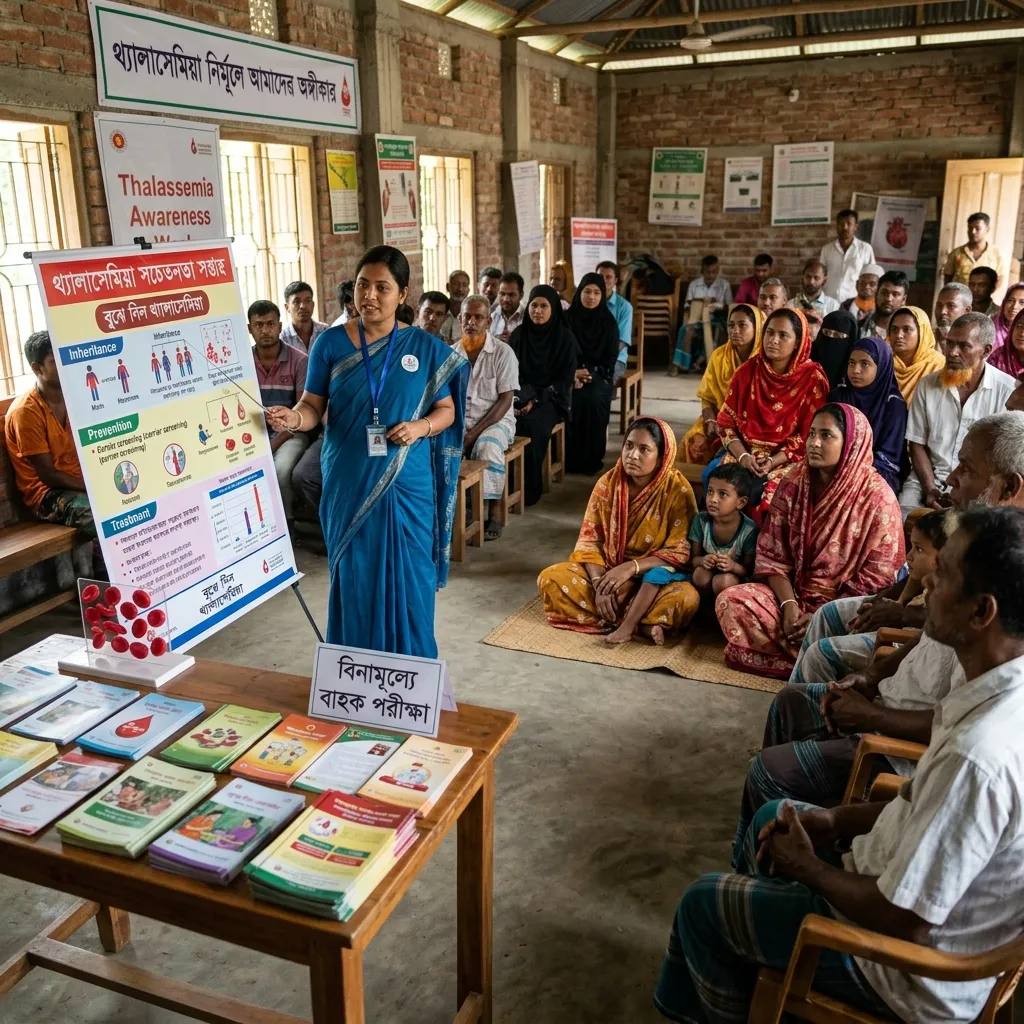 Closing the awareness gap requires coordinated action across education, healthcare, communities, and government. Here are the most effective strategies.
How do educational campaigns build awareness?
Education is the foundation of prevention. Effective campaigns deliver clear, accurate messages about what thalassemia is, how it is inherited, and why screening matters. The strongest campaigns use multiple channels at once:
- School and university programs that teach young people about carrier status before they reach marriage age.
- Mass media including television, radio, and newspapers to reach wide audiences.
- Digital and social media to engage younger Bangladeshis where they already spend time.
- Printed materials in Bangla, distributed through clinics, mosques, and community centers.
Messaging must be culturally sensitive and free of jargon so it resonates across education levels.
What role do healthcare professionals play?
Doctors, nurses, and community health workers are trusted voices. When they raise thalassemia during routine visits, recommend screening, and explain results clearly, families listen. Training more professionals to deliver accurate counseling—especially outside major cities—helps spread reliable information and corrects dangerous myths like the iron-deficiency mix-up.
Why does community engagement matter so much?
Trust drives participation. When awareness efforts involve respected local figures—religious leaders, teachers, and community elders—people are far more willing to come forward for screening. Local initiatives such as free screening camps, support groups, and peer networks break stigma and bring testing closer to those who need it. Learn how grassroots efforts succeed through thalassemia community engagement.
What can government and NGOs do together?
Lasting change needs strong policy. The Bangladeshi government has begun recognizing thalassemia as a public health priority, supporting screening initiatives and improving blood transfusion services. Continued investment in subsidized testing and premarital screening programs would accelerate progress.
NGOs fill critical gaps in the meantime. Groups like the Bangladesh Thalassemia Foundation provide screening, counseling, financial support, and patient education. When government bodies, NGOs, hospitals, and communities pool their resources, the impact multiplies. These proven thalassemia prevention programs show what coordinated action can achieve.
How does increased awareness improve prevention and patient care?
The benefits of awareness ripple across prevention and management alike.
On the prevention side, awareness drives people toward carrier screening and genetic counseling for thalassemia. A simple blood test—a complete blood count followed by hemoglobin electrophoresis—can reveal carrier status before marriage. Couples who learn they are both carriers can then explore their options with a counselor, from prenatal testing to other reproductive choices. To understand the testing process, see this thalassemia carrier screening test guide.
For patients already living with thalassemia, awareness improves daily life. Informed patients are more likely to stick to transfusion schedules, take their iron chelation medication consistently, and recognize warning signs early. Education also reduces fear around treatment, leading to better cooperation and stronger long-term outcomes.
Awareness also reshapes how society treats patients. As myths fade, stigma weakens, and affected families gain the empathy and support they deserve. That shift helps patients pursue education, build careers, and lead full, productive lives.
What does the future of thalassemia awareness in Bangladesh look like?
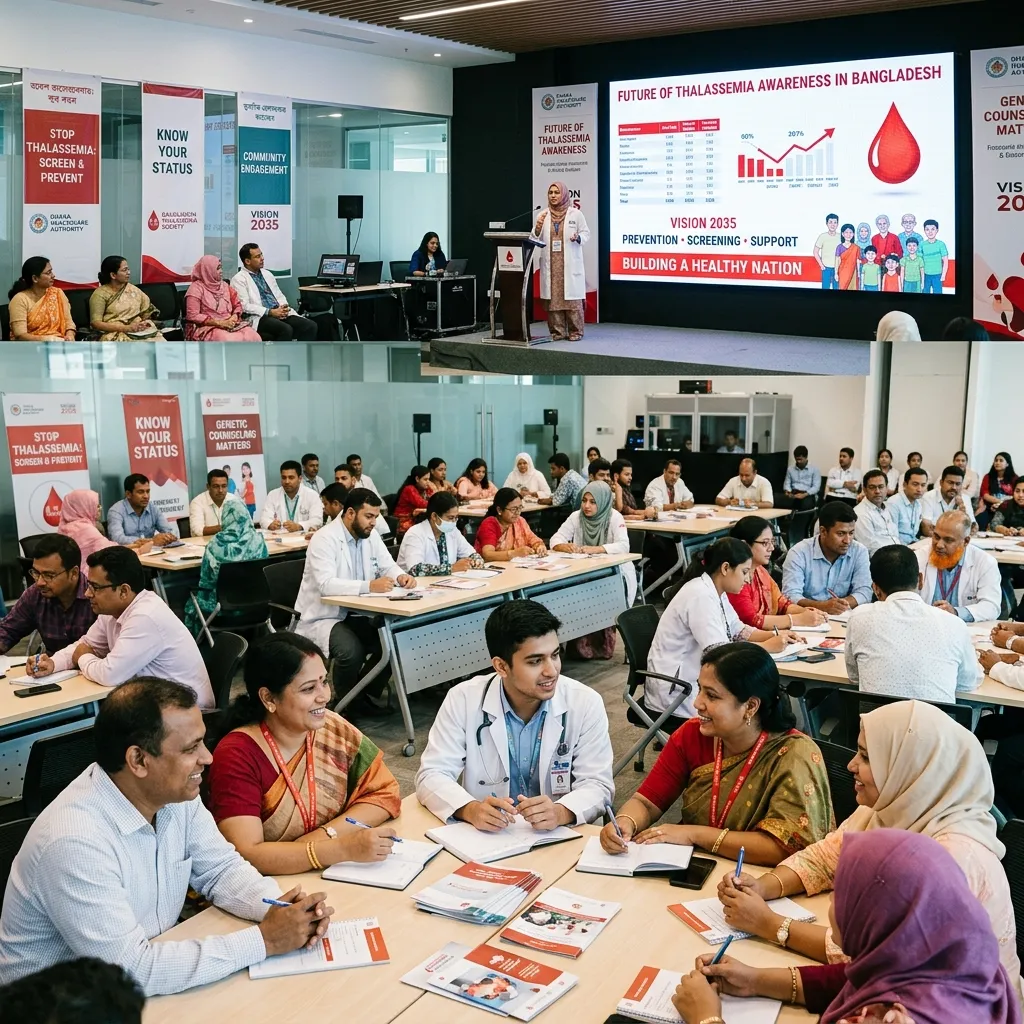 The outlook is hopeful. Digital health tools, mobile screening units, and telehealth counseling are making information and testing more accessible than ever—even in remote regions. Faster, cheaper genetic tests are lowering the cost of early detection. And as global research advances toward gene therapy and improved treatments, the day-to-day reality for patients continues to improve.
The success stories of Cyprus and Italy, which nearly eliminated severe thalassemia through screening and education, prove what is achievable. Bangladesh can follow a similar path by adapting these proven strategies to local culture and resources.
Real change starts with individual action. If you live in Bangladesh or have a family history of thalassemia, the single most powerful step you can take is simple: get screened and talk to a genetic counselor before marriage or pregnancy. Encourage your family and friends to do the same. Share accurate information, support local awareness campaigns, and help break the silence around this preventable disease.
For trusted global guidance, the World Health Organization and the Centers for Disease Control and Prevention offer reliable resources on inherited blood disorders, screening, and prevention.
Building a Thalassemia-Free Bangladesh
Thalassemia awareness in Bangladesh is not just a medical issue—it is a shared responsibility that touches families, communities, and the entire nation. The evidence is clear: where awareness, screening, genetic counseling, and supportive policy come together, severe cases drop sharply.
Prevention is far more effective and affordable than a lifetime of treatment. Every conversation about thalassemia, every blood test taken before marriage, and every myth corrected brings the country closer to a future where no child is born into needless suffering.
Take the first step today. Get screened, learn your status, and spread the word. Together, knowledge can protect the next generation and move Bangladesh toward a thalassemia-free future.
Conclusion
Thalassemia awareness in Bangladesh is a critical step toward reducing the burden of this inherited blood disorder and preventing new cases through education, carrier screening, and genetic counseling. When individuals understand their carrier status and the risks associated with thalassemia, they can make informed decisions that protect future generations.
Strengthening thalassemia awareness in Bangladesh requires the combined efforts of healthcare professionals, educators, community leaders, government agencies, and families. Through continued public education, accessible screening programs, and increased support for affected individuals, Bangladesh can move toward a future with fewer severe thalassemia cases and better health outcomes for those living with the condition.
Frequently Asked Questions
1. What is thalassemia awareness in Bangladesh and why does it matter?
Thalassemia awareness in Bangladesh means educating people about this inherited blood disorder, how it spreads, and how screening prevents it. It matters because awareness leads to early carrier detection and informed family planning, which can prevent thousands of severe cases each year.
2. How common is thalassemia in Bangladesh?
Roughly 6 to 12 percent of Bangladesh’s population carries the thalassemia or hemoglobin E trait. With a population over 170 million, that means millions of silent carriers, and thousands of affected children are born each year.
3. Who should get screened for thalassemia in Bangladesh?
Anyone planning to marry or have children should consider screening, especially those with a family history of thalassemia or unexplained anemia. Premarital and pre-conception screening are the most effective times to test.
4. How is thalassemia passed from parents to children?
Thalassemia follows an autosomal recessive pattern. If both parents are carriers, each pregnancy has a 25 percent chance of a child with severe thalassemia, a 50 percent chance of a carrier child, and a 25 percent chance of an unaffected child.
5. What are the most common misconceptions about thalassemia?
The biggest myths are that thalassemia is contagious (it is not—it is genetic), that it is the same as iron deficiency anemia (it is not, and iron supplements can be harmful), and that “miracle cures” exist outside of medical care.
6. Can thalassemia be prevented?
Yes. Carrier screening before marriage or pregnancy, combined with genetic counseling, is the most effective way to prevent severe thalassemia. Countries with strong awareness campaigns have cut new cases by over 90 percent.
7. Where can I get a thalassemia screening test in Bangladesh?
Screening is available at major hospitals, diagnostic centers, and organizations such as the Bangladesh Thalassemia Foundation. A simple blood test can confirm whether you are a carrier.
8. How does awareness help patients already living with thalassemia?
Informed patients are more likely to follow transfusion and iron chelation schedules, attend regular checkups, and manage their condition well. Awareness also reduces stigma, giving patients stronger social and emotional support.
9. What role do schools and communities play in awareness?
Schools can teach young people about carrier status before marriage age, while communities—led by trusted local figures—can host screening camps and support groups. Both approaches build trust and increase participation in testing.
10. How can I help raise thalassemia awareness in Bangladesh?
You can get screened yourself, share accurate information with family and friends, support local awareness campaigns and NGOs, and help break the stigma by speaking openly about the disease.
